
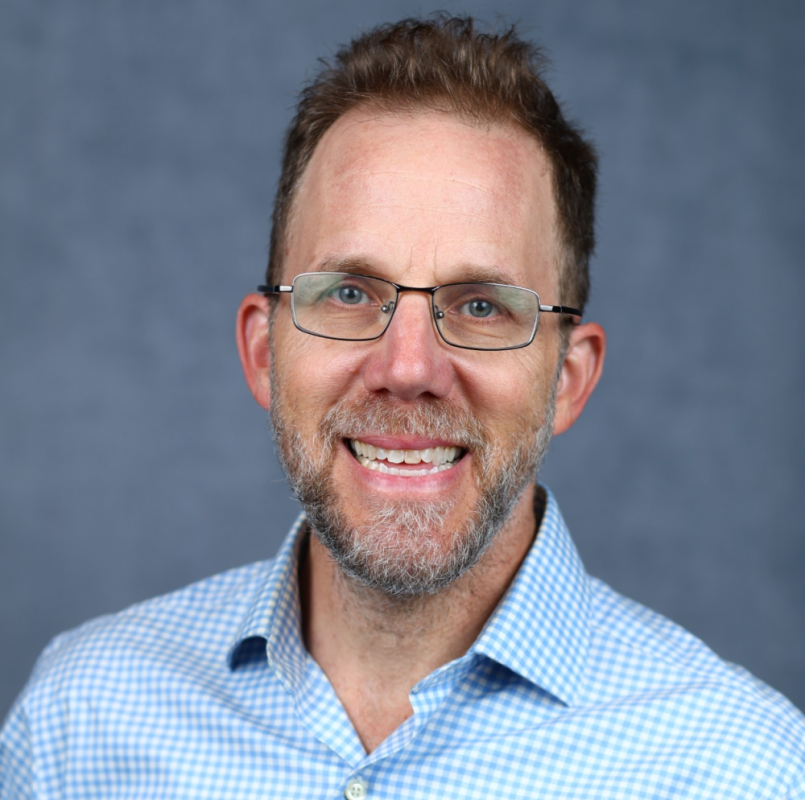
Department Seminar: David LeBauer
Title: Quantifying Agricultural Carbon and Greenhouse Gas Fluxes for Climate Mitigation
Abstract: Agricultural soils and greenhouse gas fluxes sit at the center of climate mitigation, yet predicting their response to management and climate remains deeply uncertain. Carbon and nitrogen dynamics emerge from nonlinear biological and physical processes, incomplete records, and changing environmental conditions. Converting that complexity into credible, decision-relevant insight requires integrating biogeochemical understanding with statistical inference and computational tools in ways that are rigorous and transparent.
In this talk, I describe my path from academic ecology to building modeling frameworks that support governments and climate-focused organizations working on carbon and greenhouse gas accounting in managed lands. I chose to build my career at the boundary between scientific research, open-source software, and public policy.
I will introduce the modeling framework behind these systems in accessible terms: how biological processes are represented in models, how Bayesian calibration constrains parameters using field data, how ensemble simulations and sensitivity analysis characterize uncertainty, and how transparent, reproducible workflows determine whether models are defensible in policy contexts.
The broader message is that meaningful climate mitigation depends not only on better data and models, but on scientific rigor, computational discipline, and transparent collaboration across sectors.