
ENSO Complexity and Diversity
The group studies Central-Pacific and Eastern-Pacific ENSO, El Nino-La Nina asymmetry, multi-year ENSO, and changing ENSO impacts.
Read moreClimate System Dynamics
Led by Professor Jin-Yi Yu, the group investigates climate dynamics, ocean-atmosphere interactions, ENSO complexity, marine heatwaves, monsoons, trans-basin climate links, atmospheric waves, clouds, and climate-model diagnosis.
Director
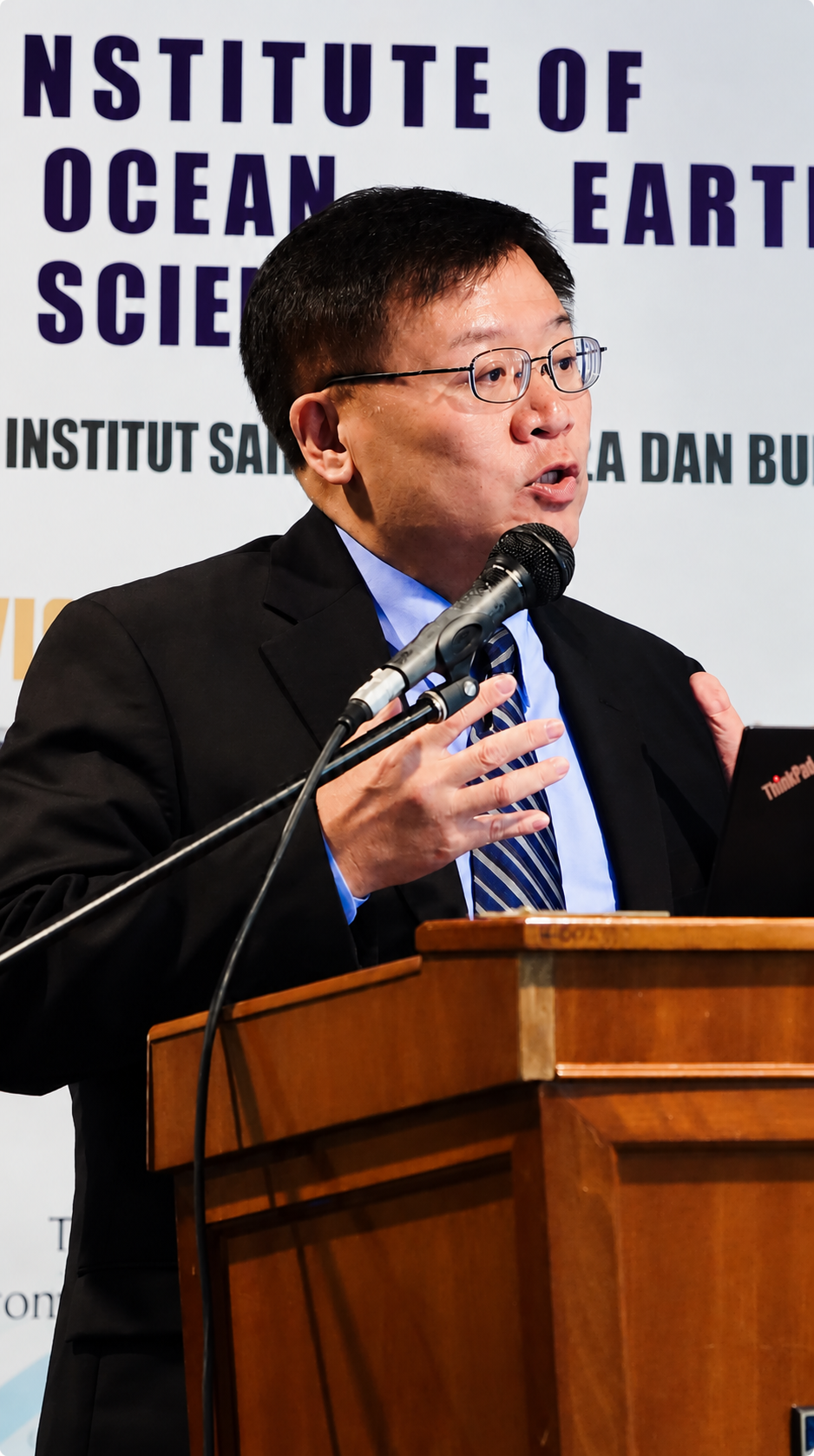
Jin-Yi Yu is a Professor in the Department of Earth System Science at the University of California, Irvine. He received a Ph.D. in Atmospheric Sciences from the University of Washington. His research contributions span climate modeling, dynamics, diagnosis, ENSO complexity, trans-basin interactions, marine heatwaves, monsoons, jet streams, and marine clouds.
Research Areas
The group studies Central-Pacific and Eastern-Pacific ENSO, El Nino-La Nina asymmetry, multi-year ENSO, and changing ENSO impacts.
Read moreResearch develops dynamical frameworks for North Pacific marine heatwave patterns, atmospheric wave trains, and multi-year persistence.
Read moreResearch examines how the Pacific, Atlantic, Indian Ocean, Arctic, and Southern Ocean shape climate variability from year to year and decade to decade.
Read moreProjects examine Indian Ocean dipole variability, Indian-Australian monsoon interactions, Indonesian Throughflow, and tropospheric biennial oscillation.
Read moreWork includes jet stream vacillation, baroclinic wave dynamics, wave-mean flow interaction, marine stratocumulus clouds, and cold tongue climate.
Read moreThe group develops and diagnoses atmospheric and coupled ocean-atmosphere models, including regional and global climate-model improvement.
Read moreResearch Details
Each topic below expands the brief research-area summary above into the kinds of questions, mechanisms, and impacts the group investigates.
Professor Yu's research introduced the terms Central Pacific El Nino and Eastern Pacific El Nino and helped establish ENSO diversity as a major climate-science topic. The group studies subtropical forcing, onset dynamics, El Nino-La Nina asymmetry, multi-year ENSO, prediction, model simulation, and global climate impacts.
The group studies North Pacific marine heatwave dynamics, including distinct marine heatwave patterns, atmospheric wavetrain mechanisms, trans-basin feedbacks, and the processes that sustain long-lasting marine heatwaves in regions such as the Gulf of Alaska.
Research connects climate variability across the Pacific, Atlantic, Indian Ocean, Arctic, and Southern Ocean. Topics include Atlantic and Indian Ocean controls on ENSO, Pacific-Atlantic climate connectivity, Arctic warming effects, links between the Pacific Decadal Oscillation and Atlantic Multidecadal Oscillation, and climate shifts in the 1970s and 1990s.
The group studies the internal and forced components of Indian Ocean dipole variability, interactions between the Indian Ocean and monsoon, recent changes in Indian-Australian monsoon interactions, and the role of Indonesian Throughflow in Pacific-Indian Ocean exchange.
Professor Yu's earlier work advanced understanding of baroclinic wave life cycles, jet stream vacillation, wave-mean flow interaction, and orographic stationary waves. Related cloud-climate research examines marine boundary layer clouds, model treatment of stratus, and Peruvian stratocumulus impacts on the eastern Pacific cold tongue.
Modeling work includes development of an atmospheric GCM using a full Galerkin method, coupling UCLA AGCM with LANL POP for a global parallel coupled ocean-atmosphere GCM, basin coupled-decoupled experiments for cross-basin interactions, and diagnosis and improvement of regional and global climate models.
Visual Research Summary
These visuals are adapted from Professor Yu's conference and seminar presentations. They highlight cross-basin controls, solar-cycle modulation, marine heatwaves, and recent Pacific sea-surface-temperature conditions.


Video Talks
Selected video presentations sharing perspectives on ENSO dynamics and climate variability.
Canadian Meteorological and Oceanographic Society (CMOS) Toronto Chapter · February 18, 2026
Professor Yu’s presentation to the Canadian Meteorological and Oceanographic Society (CMOS) Toronto Chapter highlights the subtropical ENSO dynamics framework he has developed over the past decade and its implications for understanding the 21st-century El Niño.
Watch the presentation on YouTube →Full Publications
View Professor Yu's publication citation counts and citation metrics on Google Scholar.
Connect
For information about research collaborations, publications, or student opportunities, contact Professor Yu through the Department of Earth System Science at UC Irvine.